Why Is There No Amul For Farm Products?
- Vijay Odedra

- Jun 16, 2020
- 4 min read
Updated: May 16, 2022
First of all, how does the groundnut from a farmer reach you?
The entire process is very complicated and complex yet I have tried my best to explain it in the simplest way.

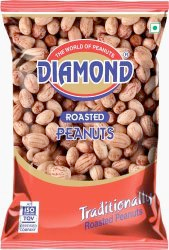
A middleman buys groundnuts from us and sells them to Diamond Sing, which is a manufacturing company of various such products.
Diamond Sing falls in the category of Regional Businessman. Because along with exporting peanuts and other products to National Companies like Reliance Retail, they also sell their products directly to customers.
In fact, I have consumed Diamond products many times. You have to keep in mind that even a farmer is a customer many times.
When Reliance Retail receives exported peanuts from Diamond, they pack them in their labelled packets which are put on shelves of their Super Markets in one way or the other way.

Not just that, they also push their products to regional distributors. Customers buy even from there. Regional Distributors push those products to Local Retailers around you. You can buy even from there.
The names of the companies are just examples to make it easier to understand. At each level, different corporations act differently and serve different needs.
So, it's a kind of a myth that only one middleman is involved in this whole process. It's true and false, both.
Also, you don't get it raw. It's either converted into a totally different product or processed/cleansed to make it presentable.
So when we talk about removing middlemen, we are actually talking about the eradication of many different entities.
And if we want to eradicate that, we have to either find a smarter way to work efficiently without it or find another option for it. An average Indian farmer can not do that alone. And, if he can, he can do it on a very small scale.
As per my understanding, first and foremost, we will need a huge amount of money to set up infrastructure to develop a full-fledged working replica of the above-mentioned model.
A customer hardly receives raw products. So we need to set up oil mills, manufacturing and processing plants to make different products, godowns to store raw and finished products, transportation facilities etcetera.
Let's say we form a cooperative(union). But, it will be very difficult to convince farmers to invest initially. And farmers need money regularly, so they should be paid immediately. You can't hold their money for months.
Both tasks, convincing them to be a part of a cooperative and invest without any returns, are very very very tough. And I mean it. It's like a fantasy.
Let's assume, somehow, we manage to convince them and are able to set up a world-class infrastructure. We are now producing amazing products. We are now a National Level Company. So, basically, we have removed the local middlemen and regional businessmen.
But, how do we reach customers? We don't have our supermarkets.
So either we build supermarkets, which need more investment or we sell it online. To sell it online, we need the required infrastructure, which means more investment.
Let's assume we do that. But, the online market has its own shortcomings. Selling our products just online is not profitable enough because of the huge investments. You are in a dire need of more revenue.
So, what do you do?
You either create your own regional distribution centres all over the country or ask already existing distributors to sell your products.
Creating our own distribution centres requires more investment. Receiving more investment seems impossible at this stage. And, if we sell it to regional distributors, we are not completely eradicating “middleman” from our model.
And, creating regional distribution centres is not enough. We have to reach local retailers too if we want maximum profits. So, if we follow this typical model either we need huge investments or we can't totally eradicate middlemen.
But, we can follow another model.
After manufacturing/processing products, we can directly transport our products to local retailers across the country. That's transporting every single product from Kashmir to Kanyakumari, if we want our presence all over the country and if want to maximize profits.
The good thing about this model is that we can reach customers while playing the role of even a Regional Businessman. That would require less investment, and fewer employees and will be easy to manage.
To answer the question, yes cooperatives can definitely work.
But, the biggest problem is in uniting farmers. Most of them are uneducated, so it's not easy for them to understand the depth and benefits of a cooperative firm.
And, a lot of them need the payment for their products within a few days, which is a difficult obstacle.
Milk is a single product. While farm products can vary from place to place, from farm to farm. Also, the prices of farm products fluctuate a lot. So, in a cooperative, it will be very much difficult to come to a conclusion about buying of products of each farmer.
To conclude, cooperatives can definitely work, but it is very very very difficult to run them. Also, initially, we need determined and dedicated farmers who can work tirelessly.
The government's financial and legal help can boost the confidence of farmers and will make it easier for farmers to set up a cooperative.


Comments